Mars or Bust: Ranking the Billionaire Space Plans That Could Actually Get You to the Red Planet
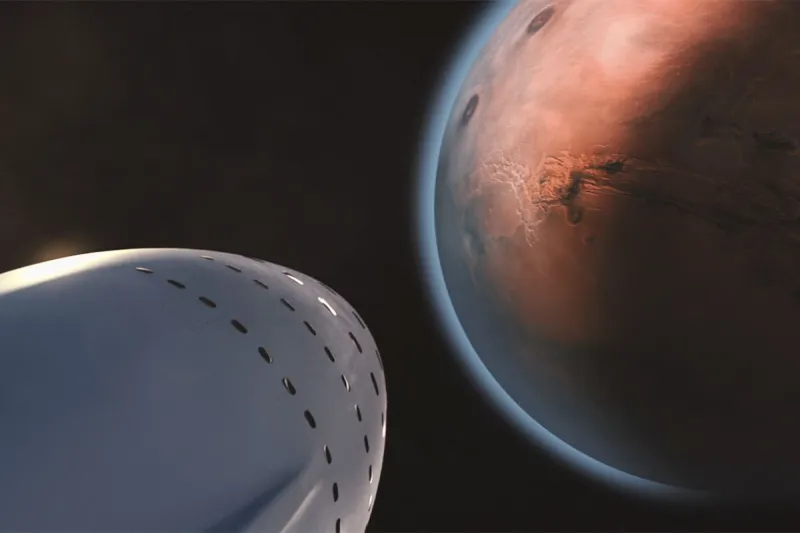
Let's be honest: there's something deeply American about the idea of packing up everything you own, pointing yourself toward an unknown horizon, and just going. It's the Oregon Trail energy, except the trail is 140 million miles long, the weather will literally kill you, and the wagon is a 400-foot stainless steel rocket that looks like it belongs in a 1950s pulp novel.
The dream of getting humans to Mars has shifted from a government moonshot fantasy to something that feels — depending on who you ask — either genuinely imminent or perpetually five years away. A cluster of commercial space companies, each backed by a billionaire with strong opinions and a flair for dramatic announcements, are competing to define what humanity's next chapter looks like. So where do things actually stand, and should you be mentally packing your bags?
The Contenders: A Realistic Scorecard
SpaceX is the name that comes up first in almost every Mars conversation, and for good reason. Elon Musk has been talking about colonizing Mars since before most people had heard of Tesla, and SpaceX has actually built the hardware to back up at least some of that talk. The Starship rocket — the most powerful ever flown — has completed several test flights, with each iteration getting closer to the full orbital profile needed for a deep-space mission.
Musk's stated goal is audacious to the point of seeming unhinged: a self-sustaining city on Mars within the lifetimes of people alive today, with early crewed missions potentially happening before 2030. Independent aerospace analysts tend to push those timelines out significantly — most put a realistic crewed Mars landing somewhere in the 2030s at the earliest, assuming continued funding, no catastrophic failures, and a lot of regulatory cooperation from NASA and the FAA.
Still, SpaceX is the only commercial player that has actually demonstrated the kind of heavy-lift capability Mars requires. That's not nothing.
Blue Origin, Jeff Bezos's space venture, has taken a notably different philosophical approach. Rather than racing to plant a flag on Mars, Blue Origin has focused on building infrastructure — reusable rockets, orbital platforms, lunar landers — with the long-term vision of moving heavy industry off Earth entirely. Bezos has been vocal about his belief that Mars colonization is a distraction from more achievable near-term goals, describing it as a "Plan B" mentality that lets people off the hook for taking care of Earth.
Blue Origin's New Glenn rocket has entered service, and their lunar ambitions are serious. But Mars? It's not really on their near-term roadmap in any concrete way.
Axiom Space is a quieter name in this conversation but an increasingly important one. They're building the first commercial space station — modules are already being attached to the ISS — and their focus is on making low-Earth orbit commercially viable. Mars is a longer-term aspiration, but Axiom represents something important: the normalization of private space infrastructure, which is a prerequisite for any Mars mission that isn't purely a government project.
What Life on Mars Would Actually Look Like
Here's the part of the Mars conversation that tends to get glossed over in the excitement of rocket specs and launch windows: the living.
Early Mars settlers would exist in conditions that make Antarctic research stations look like a spa weekend. The planet has no magnetic field to speak of, meaning radiation exposure would be a constant, life-shortening reality. Temperatures swing from around 70°F on a warm Martian afternoon to -100°F at night. The atmosphere is 95% carbon dioxide. Growing food would require pressurized habitats and carefully engineered soil substitutes. And if something goes wrong — a suit breach, a habitat failure, a medical emergency — help is, at minimum, seven months away.
Psychologists who study extreme isolation environments, including NASA's HI-SEAS Mars simulation program in Hawaii, have documented the profound mental health challenges that come with long-duration confinement in small groups. Irritability, depression, interpersonal conflict, and a phenomenon called "third-quarter syndrome" — a motivational crash that hits roughly three-quarters of the way through a mission — are consistent findings.
None of this makes Mars colonization impossible. But it does mean the first settlers would need to be extraordinarily resilient people, carefully selected and extensively trained. The romantic vision of pioneer freedom doesn't quite map onto what would functionally be a highly regimented survival operation.
The Cost Problem Nobody Likes to Talk About
SpaceX has floated the idea that a ticket to Mars could eventually cost around $100,000 — roughly the price of a house in many American cities. Musk has framed this as democratizing space, making Mars accessible to ordinary people willing to sell everything and take the leap.
Let's examine that framing for a second.
Even at $100,000, a Mars ticket is out of reach for the vast majority of Americans. Median household income in the US is around $74,000. The idea that working-class people will be among the first Martian colonists is, charitably speaking, optimistic. More realistically, early Mars will look a lot like early Antarctica: scientists, engineers, and whoever can afford or secure institutional backing to get there.
There's also the question of what you'd be signing up for. Early settlement scenarios from Musk's own presentations have described a kind of indentured frontier economy, where settlers work off the cost of their passage over years of labor. That's a detail that tends to get buried under the more cinematic aspects of the pitch.
So Should You Actually Want to Go?
Here's where Space Villa has to give you a straight answer: for most people reading this right now, Mars is not a realistic near-term destination. It's a generational project — something your kids' kids might genuinely have the option to consider.
But that doesn't make the race to get there unimportant or unexciting. The technologies being developed for Mars — advanced life support, closed-loop agriculture, radiation shielding, long-duration propulsion — will reshape life on Earth and in near-Earth space in ways we can't fully predict. The competition between these programs is accelerating innovation at a pace that government agencies alone couldn't sustain.
And honestly? There's something worth preserving in the audacity of the dream itself. The idea that humanity doesn't have to be confined to a single pale blue dot, that there are other horizons worth pointing toward — that's not just billionaire vanity. It's one of the oldest and most stubbornly human instincts there is.
Just maybe read the fine print before you sign up for the voyage.