When Your Avatar Cries: The Surprising Science Behind Heartbreak in Virtual Worlds
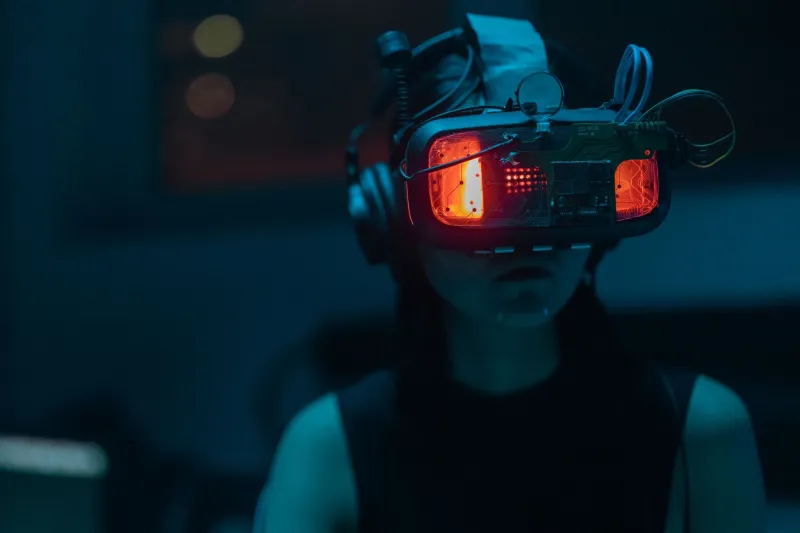
Somewhere between a pixelated sunset in a virtual city and a late-night voice chat that stretches past 2 a.m., something unexpected happens. You start to care. Not in a mild, detached, "this is just a game" kind of way. You care the way you care about your college roommate or your childhood best friend. And then, sometimes, that person disappears — blocks you, ghosts you, or just stops logging on — and the ache that follows is completely, stubbornly real.
This isn't a niche experience anymore. With platforms like VRChat, Roblox, Horizon Worlds, and a growing constellation of social metaverse spaces drawing tens of millions of users, digital intimacy has quietly become one of the defining emotional phenomena of the 2020s. And psychologists, sociologists, and everyday users are only just beginning to reckon with what that means.
Your Brain Doesn't Care If It's Pixels
Here's the uncomfortable truth neuroscience keeps handing us: the human brain is not particularly good at distinguishing between "real" emotional experiences and simulated ones. When you feel seen by someone in a virtual world — when an avatar turns toward you, remembers your name, laughs at your jokes — the same neural pathways light up as they would in a coffee shop conversation.
Dr. Sherry Turkle, an MIT researcher who has spent decades studying human relationships with technology, has described this phenomenon as our tendency to project emotional significance onto almost any interaction that mirrors social behavior. Basically, if something acts like connection, your nervous system treats it like connection.
Dopamine doesn't ask for a return address. Oxytocin doesn't check whether the hug came through a haptic vest or a real pair of arms. When someone in a virtual world shows up consistently for you, remembers the hard week you mentioned, or stays online just to keep you company — your brain files that under "belonging."
The Metaverse as Third Place
Sociologists have long talked about the concept of the "third place" — that social space outside of home and work where community gets built. Barbershops. Bowling alleys. Church basements. For a huge swath of younger Americans, those third places have migrated online, and the metaverse is increasingly filling that role.
For people who are geographically isolated, neurodivergent, disabled, or simply living in communities where they don't feel they fit, virtual worlds can offer something genuinely rare: a place where you can show up as whoever you are (or whoever you want to be) and find your people.
That's not a small thing. And the connections built there often carry real emotional weight — sometimes more than offline relationships, precisely because of the intentionality involved. You don't stumble into a virtual world by accident. You chose to be there.
When It Goes Wrong
But here's where it gets complicated, and honestly, a little heartbreaking.
Because the same features that make virtual connection feel so powerful — anonymity, the ability to curate your identity, the absence of physical accountability — also make it uniquely vulnerable to betrayal.
Relationship counselors working with clients who've experienced significant virtual-world fallouts describe a pattern that's become increasingly common: a person invests months or years of emotional energy into a digital friendship or romance, only to discover the other person was performing a version of themselves that had little to do with reality. The grief that follows isn't imaginary. It's processed by the brain the same way any significant loss is processed.
One user in an online forum dedicated to VRChat experiences described losing a close-knit group of friends after an internal drama split their virtual community apart. "I know how it sounds," she wrote, "but I cried for three days. These were people I talked to every single day for two years. The fact that I never met them in person didn't make it hurt less."
That story is far from unusual.
The Identity Question Nobody Wants to Answer
There's a thornier layer underneath all of this, and it has to do with authenticity. When you build a relationship with someone through an avatar, how much of that relationship is with them versus the character they're playing?
This question doesn't have a clean answer, and virtual world sociologists are divided on it. Some argue that the performative freedom of avatar-based identity actually allows people to express more of their genuine selves — freed from the social anxiety, body image pressure, and status signaling of physical spaces. Others worry that the gap between a person's digital presentation and their offline reality creates a structural dishonesty that makes deep connection impossible.
The truth is probably somewhere in the middle, and it probably depends heavily on the specific person and platform. But it's a question worth sitting with, especially as the metaverse becomes a more significant part of how Americans socialize.
What This Means for the Future of Connection
We're not heading toward a world where virtual and physical connection are cleanly separate categories. They're already blurring. People meet in virtual worlds and then call each other on the phone. Couples form in VR and eventually meet in person. Grief groups, AA meetings, and therapy sessions now routinely happen in digital spaces.
The emotional stakes of the metaverse aren't going to decrease. If anything, as the technology gets more immersive — better haptics, more realistic avatars, spatial audio that tricks your ears into feeling like someone is actually in the room — the depth of feeling these spaces can generate is only going to intensify.
That means we probably need to start taking virtual heartbreak seriously as a cultural phenomenon. Not dismissing it with "it's just the internet" the way previous generations did, but actually building emotional literacy around it. Recognizing that the loneliness algorithm — the one that matches us with the people who make us feel least alone — can be both a profound gift and a source of very real pain.
Your avatar might be made of polygons. The feelings it carries around? Those are entirely yours.