Built for Billions, Designed for No One: The Hidden Loneliness Wired Into Our Future Cities
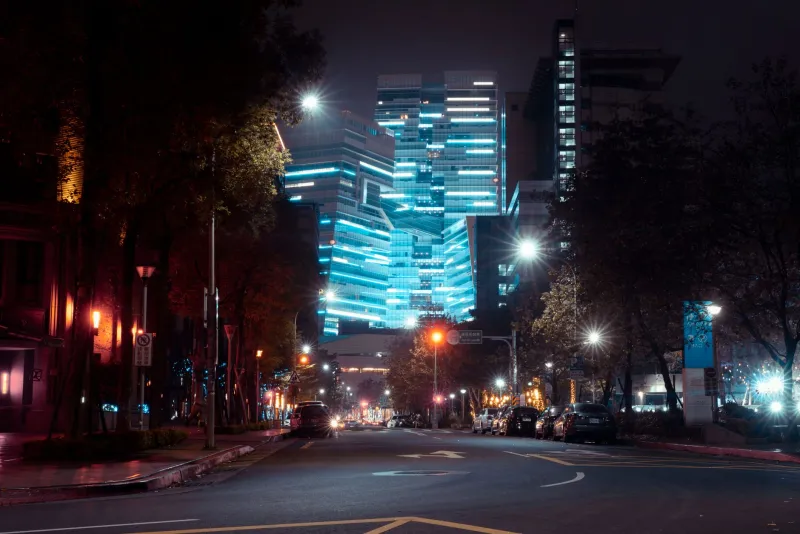
Imagine stepping outside your perfectly climate-controlled apartment in a gleaming smart city. Your phone already knows your coffee order. The crosswalk signal adjusts to your pace. A delivery drone drops a package before you even realized you needed it. Everything hums along frictionlessly — and yet, somewhere between the automated grocery pickup and the AI-curated news feed, you haven't actually talked to another human being in three days.
Welcome to the loneliness paradox: the uncomfortable truth that the more technologically sophisticated our urban environments become, the more emotionally hollow they can feel. It's happening in physical cities already experimenting with smart infrastructure, and it's arguably even more pronounced in the metaverse urban spaces being constructed right now, pixel by pixel, as the next great frontier of human settlement.
The Architecture of Aloneness
City planners have long understood that physical design shapes human behavior. Narrow European alleyways encourage spontaneous conversation. American suburban cul-de-sacs, notoriously, do the opposite. But the smart city model introduces something new: environments so perfectly optimized for individual efficiency that the friction which once forced human interaction gets systematically eliminated.
Think about what friction used to do for us. Waiting in line at a coffee shop meant chatting with the person behind you. Bumping into a neighbor at a mailbox cluster meant a five-minute conversation about nothing important — and everything that matters. Smart city design, with its frictionless architecture, quietly removes those accidental collision points between people.
Dr. Colin Ellard, an environmental psychologist at the University of Waterloo, has spent years studying how urban environments affect our emotional states. His research consistently shows that spaces optimized purely for efficiency tend to generate psychological stress and detachment. "We need a certain amount of unpredictability in our environment," he's noted in various public discussions. "When everything is curated for you, you lose the sense of being a participant in a living world."
Smart cities, for all their innovation, are essentially curated environments scaled to a metropolitan level.
When the Metaverse Builds the Same Mistake, Bigger
If physical smart cities are making this error, virtual urban spaces are making it at warp speed.
The metaverse cities being developed by major tech platforms and independent virtual world builders share a seductive promise: total customization. You can design your neighborhood to reflect your aesthetic perfectly. You never have to encounter traffic, rudeness, or weather you didn't choose. Sounds incredible, right?
Except sociologists who study online communities have been watching something troubling unfold in these spaces. When environments are infinitely personalized, people stop encountering the other — the stranger whose life looks nothing like theirs, whose presence forces a moment of recognition, empathy, or even conflict that ultimately builds social fabric.
Virtual cities tend to self-sort aggressively. People cluster into digital neighborhoods of like-minded users, reinforcing existing worldviews and social circles. The spontaneous cross-pollination that makes real cities culturally electric — the Brooklyn poet grabbing lunch next to the Wall Street analyst — simply doesn't happen when algorithms optimize your environment to show you more of what you already like.
The result? A city of billions with the social texture of a studio apartment.
The Irony Nobody Wants to Talk About
Here's where it gets philosophically thorny. The engineers and architects building these future cities — both physical and digital — genuinely believe they're solving for human wellbeing. Smart city dashboards track air quality, reduce commute times, and optimize energy use. Metaverse urban planners tout accessibility, inclusivity, and the democratization of beautiful living spaces.
And they're not wrong about those benefits. The problem isn't malicious intent; it's a fundamental blind spot about what humans actually need versus what they say they want.
Surveys consistently show that people claim to want convenience, privacy, and efficiency. But longitudinal studies on wellbeing tell a different story: the single strongest predictor of long-term happiness is the quality and quantity of human connection. Not convenience. Not optimization. Connection — messy, inefficient, sometimes uncomfortable human connection.
So we're building cities optimized for what people say they want, and inadvertently stripping out the conditions that produce what people actually need.
What Urban Futurists Are Getting Right (and Wrong)
To be fair, some architects and planners are pushing back against the isolation-first model. There's a growing movement in urban design sometimes called "tactical urbanism" — the deliberate insertion of shared spaces, communal infrastructure, and what designers call "third places" (not home, not work, but somewhere in between) into smart city blueprints.
Some metaverse developers are also experimenting with design choices that intentionally create friction. Shared resource nodes that require cooperation. Public squares that can't be algorithmically bypassed. Events that pull people from their customized bubbles into genuinely shared experiences.
These are encouraging signals. But they remain the exception rather than the rule in an industry still largely driven by metrics that measure throughput, not togetherness.
The Astronaut Analogy
It's worth noting that space agencies have been grappling with this exact problem for decades — just in a more extreme context. NASA and its international partners have invested enormous resources studying how to preserve psychological health and social cohesion among small crews on long-duration missions. The findings are instructive.
Astronauts in isolation don't just need tasks to complete. They need genuine social rituals, shared meals, moments of levity and vulnerability, and the feeling that their presence matters to the people around them. Strip those elements out — even in an environment with every technological amenity — and psychological deterioration accelerates.
Our future cities, in a sense, are becoming spacecraft for billions. The same principles apply. Technology without intentional human architecture doesn't produce flourishing. It produces a very comfortable, very lonely void.
So What Do We Actually Do?
The good news is that this isn't a problem without solutions. It's a problem without prioritization.
City planners could mandate shared green spaces and communal infrastructure the same way they mandate fire codes. Metaverse developers could build social interdependence into the core mechanics of virtual urban life, rather than treating connection as an optional feature. Residents — physical and virtual — could advocate loudly for the kinds of spaces that force beautiful, inconvenient human encounters.
But it starts with acknowledging the paradox honestly. The future doesn't automatically come with community baked in. Someone has to fight for that part.
The most advanced city in the universe, whether it's floating in a space habitat above Earth or rendered in stunning 8K resolution on a virtual horizon, is only as good as the human warmth it manages to sustain. Get that wrong, and all the smart infrastructure in the solar system won't make it feel like home.